Feed
All posts
Everything I've shared across social networks, newest first.
LinkedIn
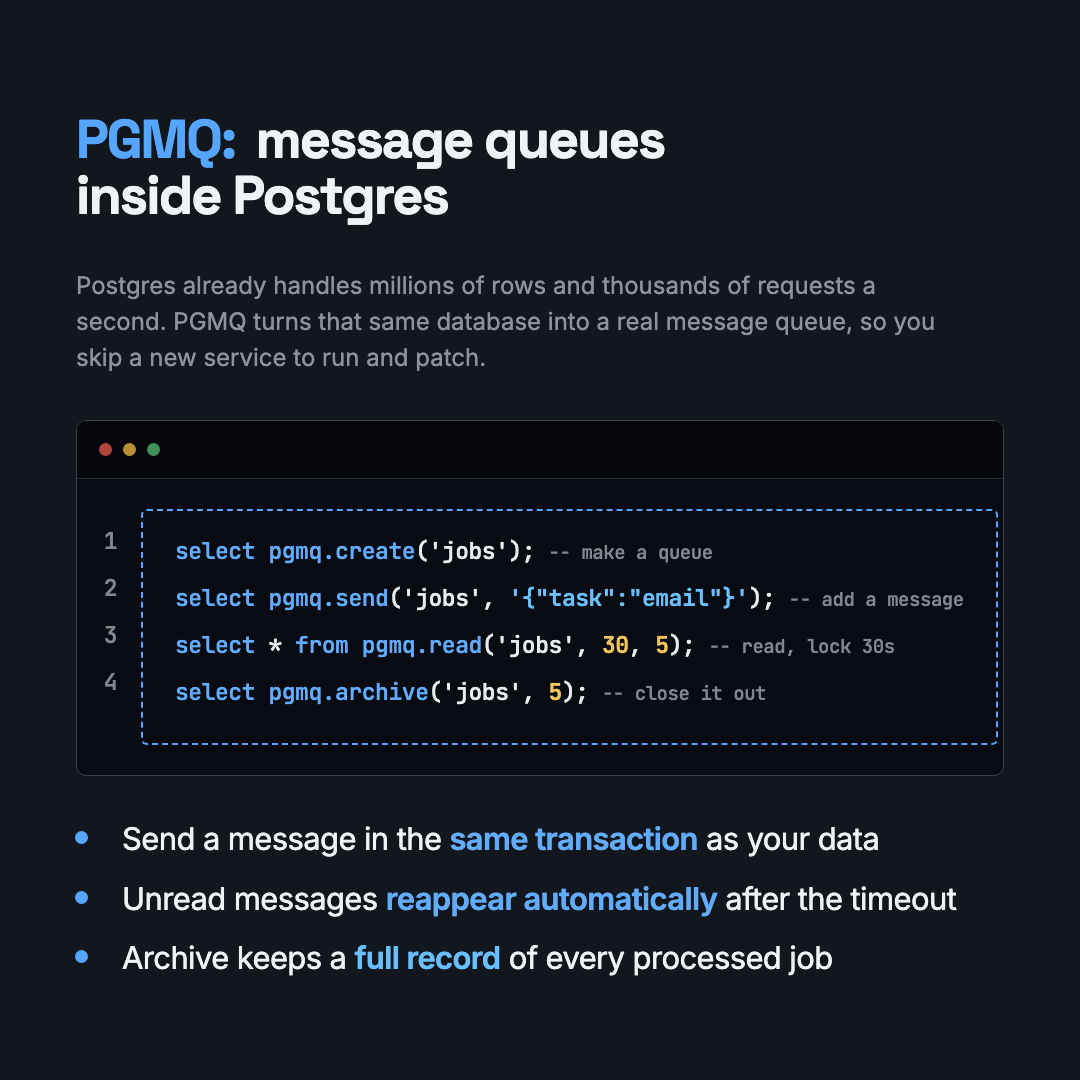
PGMQ is worth a look. SQS does its job but coordination feels like pain sometimes. RabbitMQ is the one I get less angry about using because setup and interactions are simpler. Now that Postgres can handle queues at the d…
Read more →LinkedIn
I watched a great interview with Gregor Hohpe recently. He describes the architect as an amplifier instead of an oracle, focusing on making the team smarter rather than being the smartest person in the room. I'm especial…
Read more →LinkedIn
Rich Harris (creator of #Svelte) says AI helps more when assembling pre-made pieces for an application than when exploring the novel space needed for a framework. Even so, his team still uses AI to build Svelte and Svelt…
Read more →LinkedIn
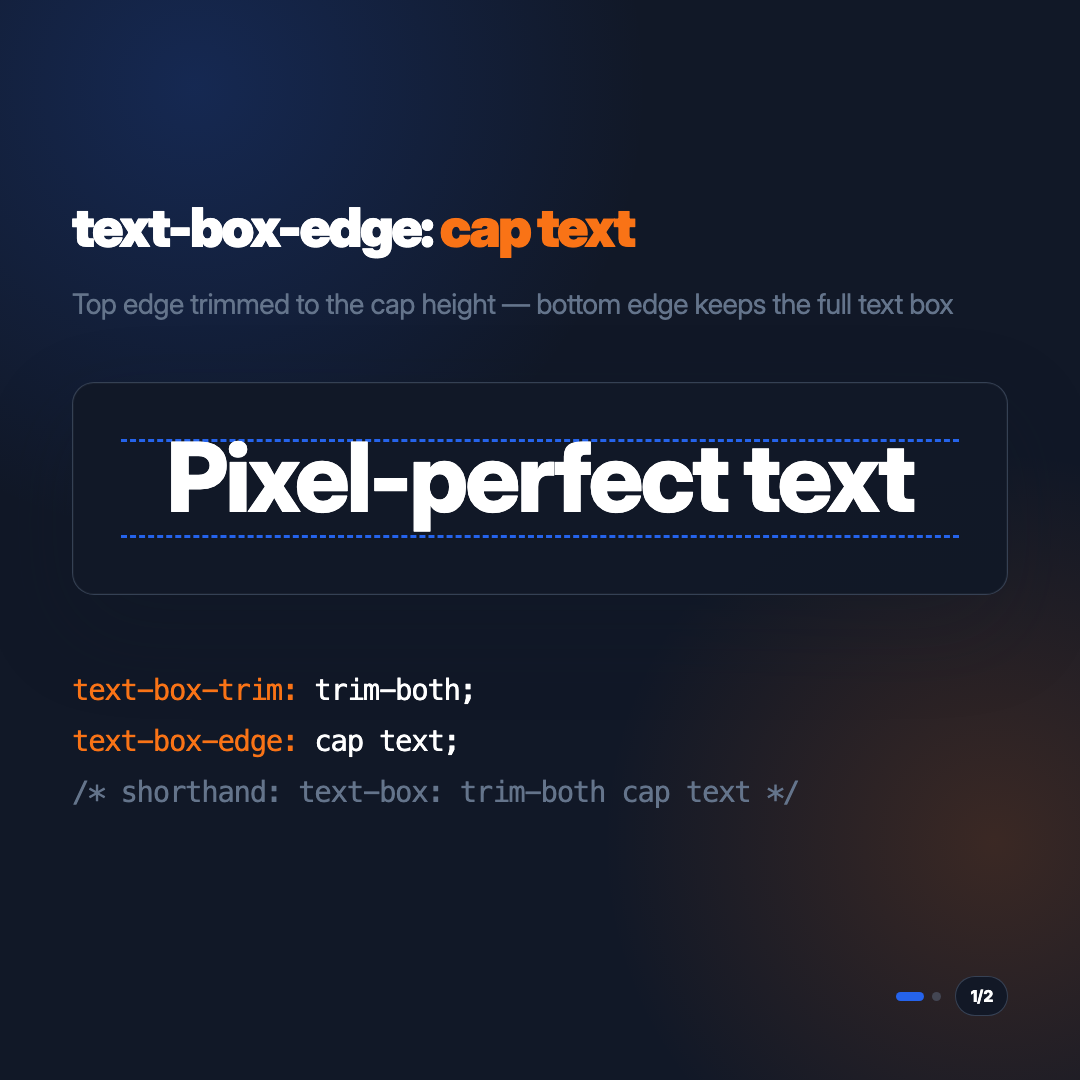
I always found the natural padding around CSS text annoying, especially for pixel-perfect layouts with custom fonts. Using line-height to force a tighter fit was always a messy, fragile workaround. Now text-box-trim and …
Read more →LinkedIn
I loved the projects I built with the SvelteKit and Svelte 5 combo, so I cannot wait to start a real project with SvelteKit 3 ⚡. I am especially eager to use Remote Functions from SvelteKit 2.27 and async Svelte from Sve…
Read more →LinkedIn
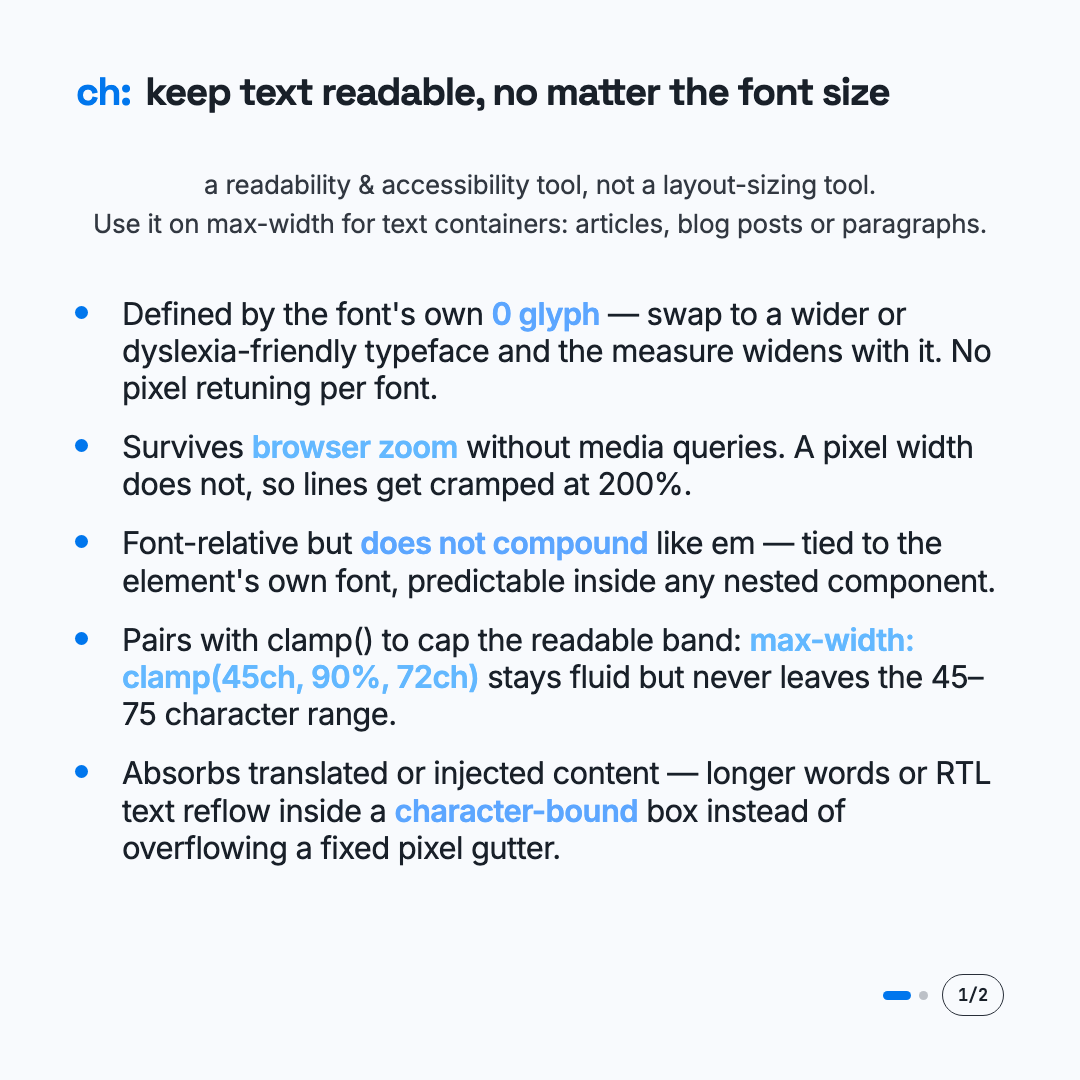
I was baffled when I realized that I never saw a real reason to use ch for text sizing. It did not make sense to me at the time. Now I see this unit has been available since 2015, yet few developers actually use it. We s…
Read more →LinkedIn
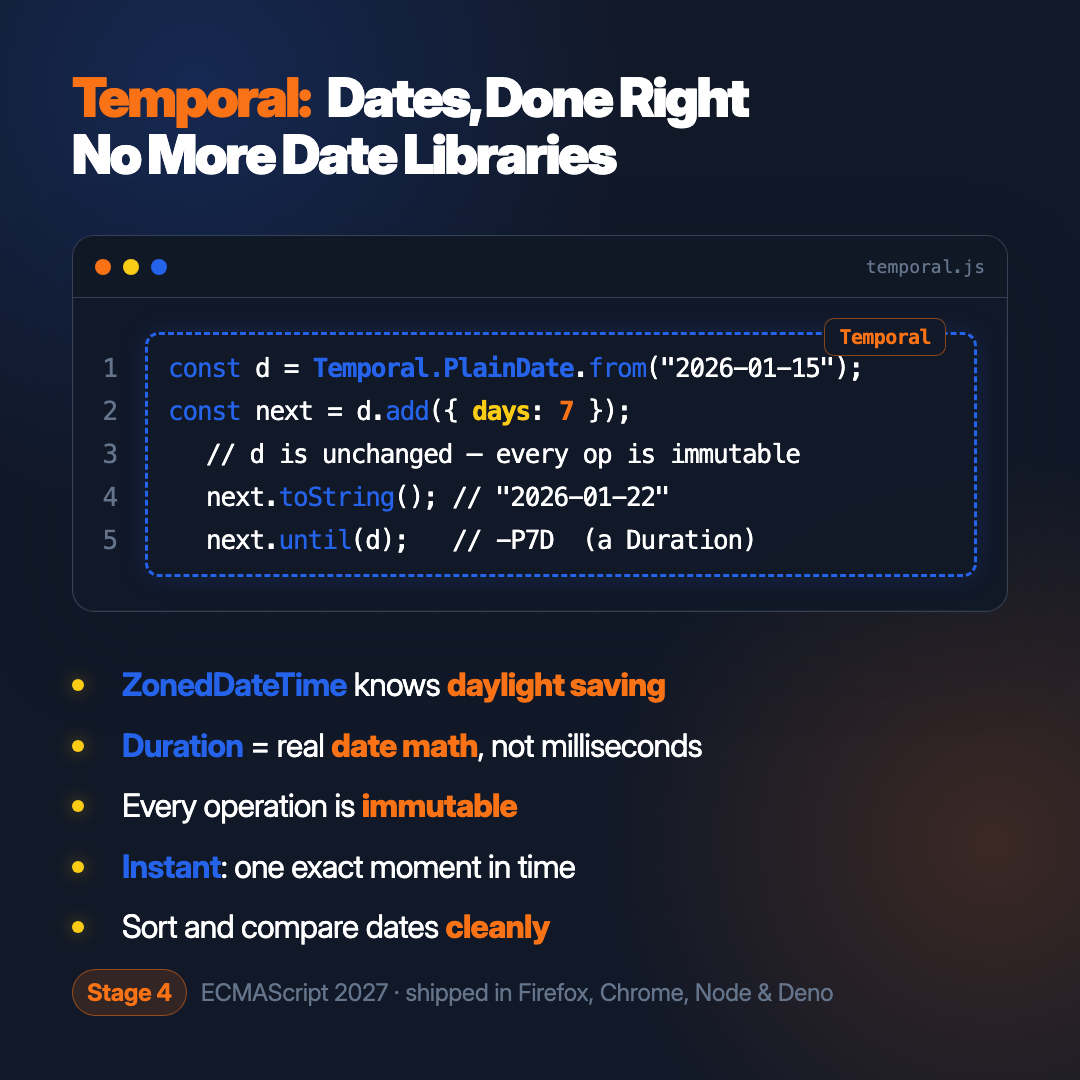
Date has always been a pain to manipulate in JavaScript, especially once timezones get involved. I'm glad the Temporal API is here to finally fix this for good, so for basic date work I won't need dayjs, luxon, or date-f…
Read more →LinkedIn
Web apps can now open the native share menu on mobile devices. This usually means wrapping it in a native app, but the browser already has this built in. You can use the Web Share API to let people share links to WhatsA…
Read more →LinkedIn
This is the kind of smart CSS that also makes the experience better the small interaction details I love giving users. The trick is clamp() doing the heavy lifting keeping the radius in bounds while it adapts and most pe…
Read more →LinkedIn
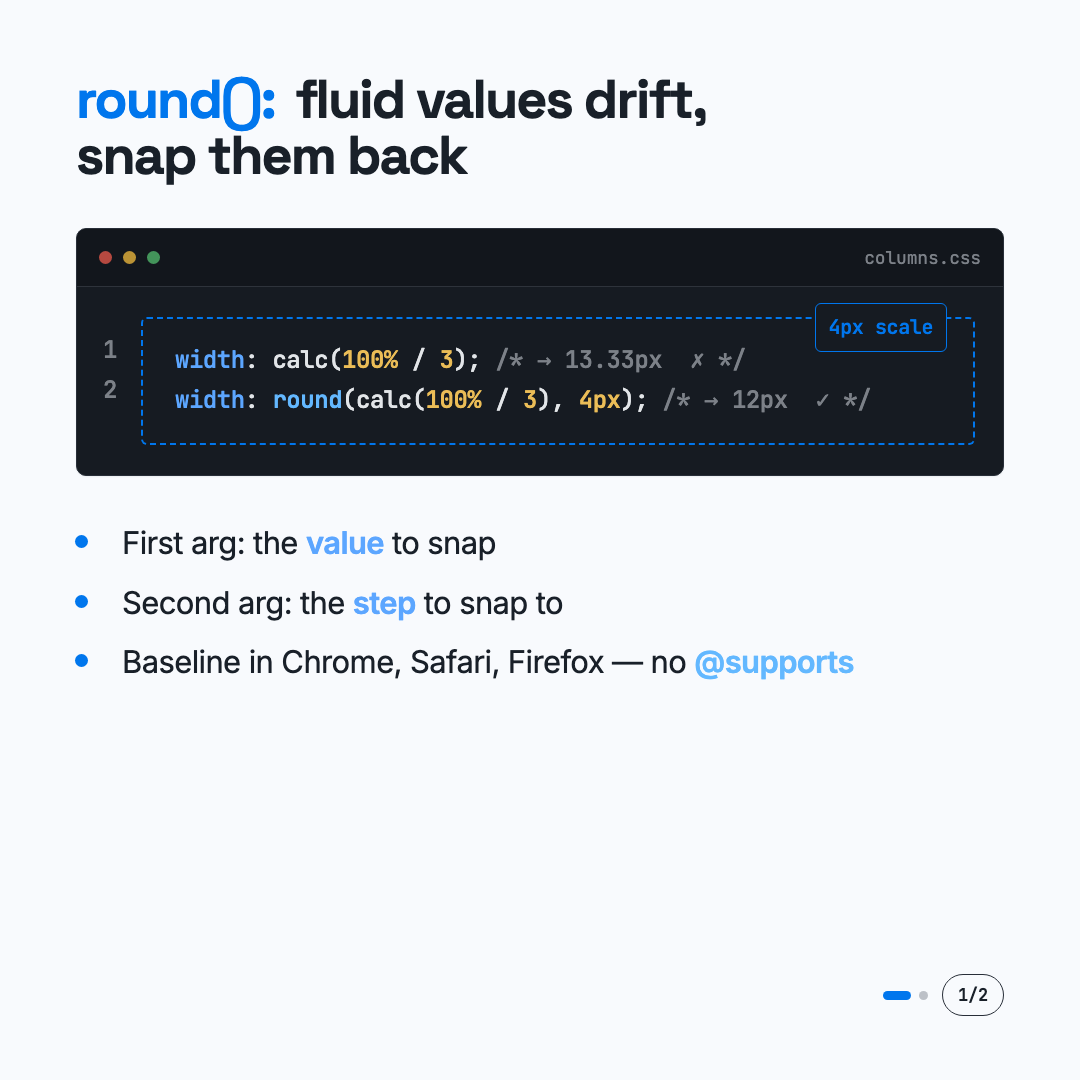
A pixel-perfect design system on a 4px scale breaks when a fluid column computes to 13.33px. Product and design teams complain about exactly this, spacing looks off and shifts across viewports. What would be a good way …
Read more →LinkedIn
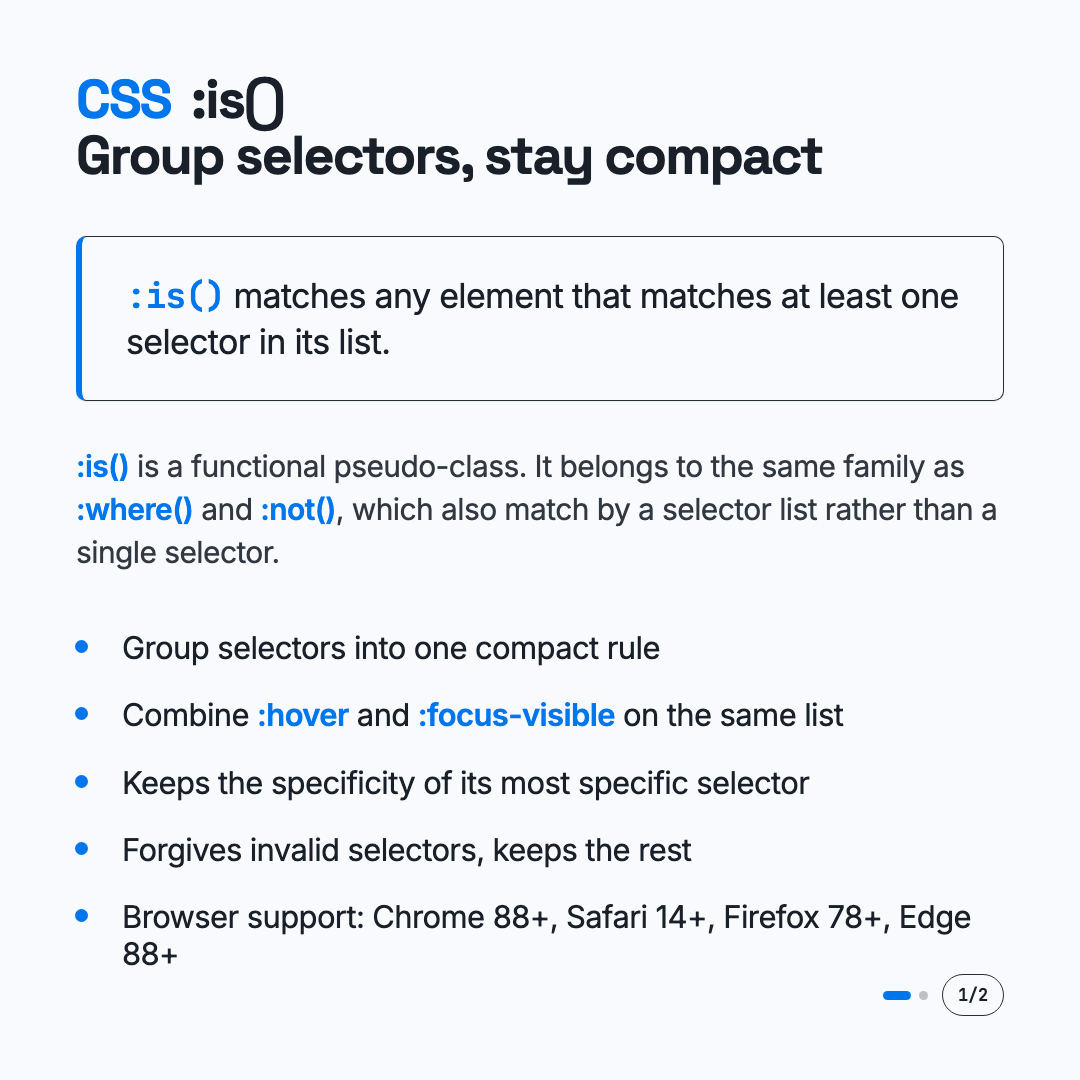
CSS :is() quietly amuses me. Group selectors in one rule and stop repeating the same list for :hover and :focus-visible. Think about shared behavior first and name the elements, then add the states. It shifts how I plan…
Read more →LinkedIn
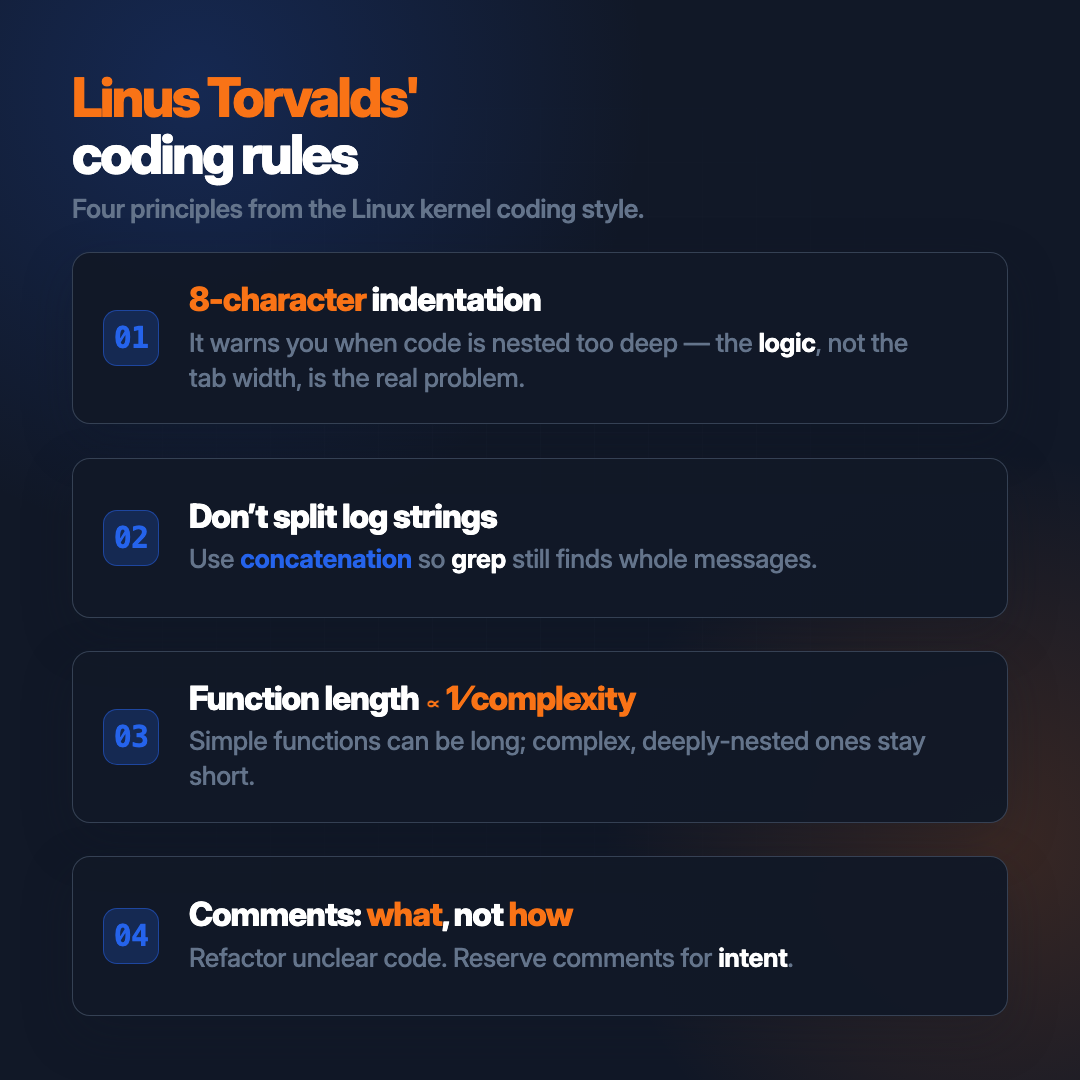
Even as a front-end developer, these points are required knowledge. This is the bread and butter for full stack development. If you are a backend developer, you should make these recommendations when a project fails to …
Read more →LinkedIn
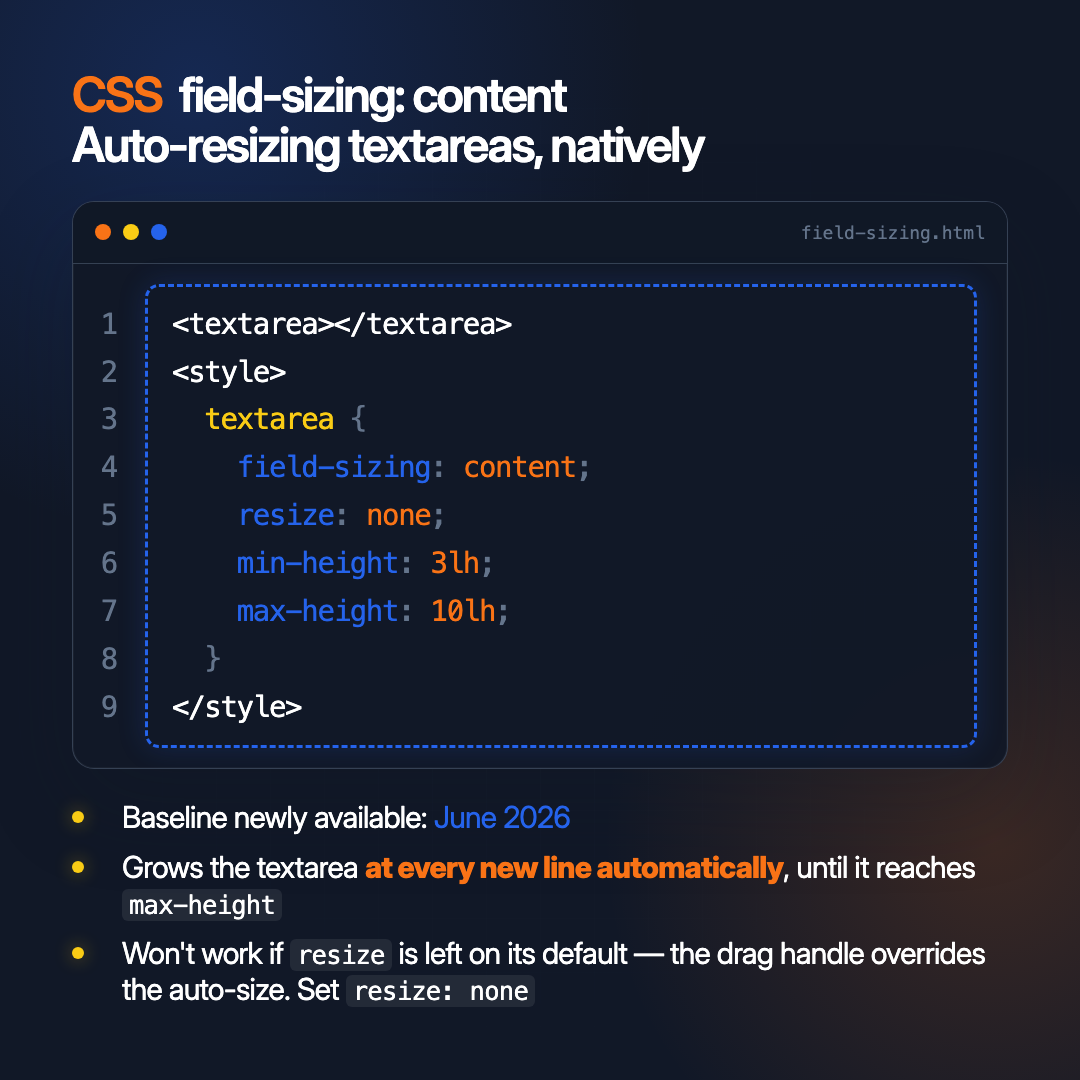
Another JavaScript workaround I don't need to worry about anymore. Textareas finally grow to fit their content with one CSS declaration. I can stop installing a framework package or writing a scrollHeight loop for a nat…
Read more →LinkedIn
You know when you just know a library will improve the user experience? https://lnkd.in/d7PGSdha morphicons is one of those. It animates any stroke SVG icon into another using spring physics and optimal rotation, no ad…
Read more →LinkedIn
Reading code resembles solving a puzzle more than reading an ordinary sentence. It trains a repeatable way to dismantle complexity. Over the years, I learned to break large problems into smaller, executable steps. That …
Read more →LinkedIn
This is one of those features I didn’t know I wanted so much. One of the hardest parts of larger tasks is breaking the work into smaller PRs that are easy to review and integrate. Sometimes a change touches dozens of fi…
Read more →LinkedIn
Well, with calc, @function, and if() in CSS, you can do pretty much anything. Someone built a working x86 processor, the kind of chip that powered early PCs, using nothing but CSS. No JavaScript, no plugins. A real C pr…
Read more →LinkedIn
There was a time when readable code meant following small, deliberate constraints. You spaced for clarity, kept functions short when complexity grew, and commented intent instead of mechanics. AI tools now push for maxim…
Read more →LinkedIn
Apple's Liquid Glass effect from WWDC 2025, recreated with CSS and SVG. No WebGL and, no libraries, just SVG displacement maps, Snell's law, and some clever gradient math 🤯 That's the kind of interaction design I res…
Read more →LinkedIn
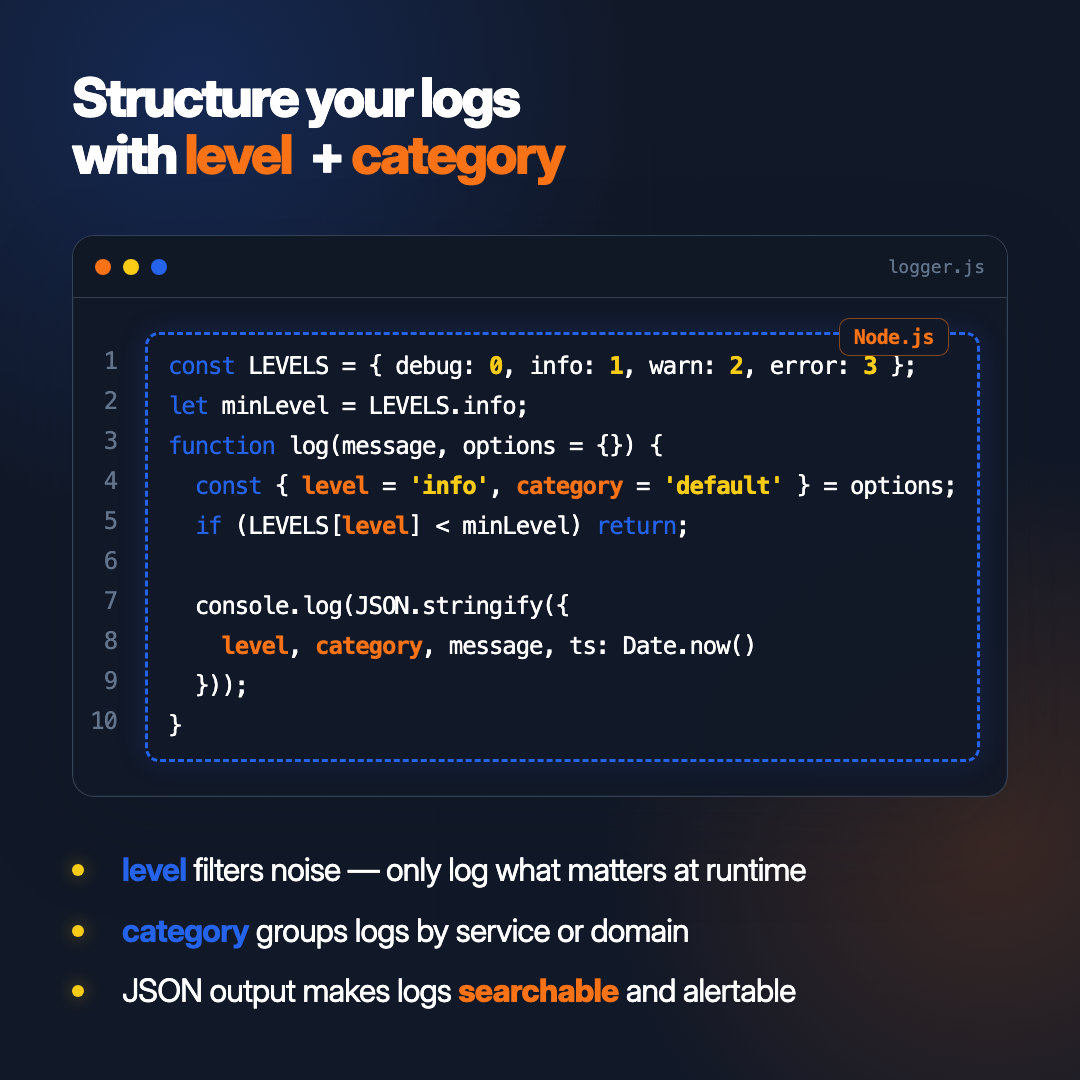
Observability starts with knowing the difference between a warning and a real error. BetterStack keeps putting out content on the topics developers actually need to get right. Structured JSON output makes debugging far …
Read more →LinkedIn
I just watched Kevin Powell's latest video on CSS offset-path, and it's a great reminder of how much animation power we have in plain CSS now. The property lets you move elements along a path, and you don't even need SVG…
Read more →LinkedIn
.env files work fine for quick projects and MVPs, but once a codebase grows and several people are touching it, syncing secrets and avoiding accidental leaks becomes real friction. Someone commits a real key by mistake, …
Read more →LinkedIn
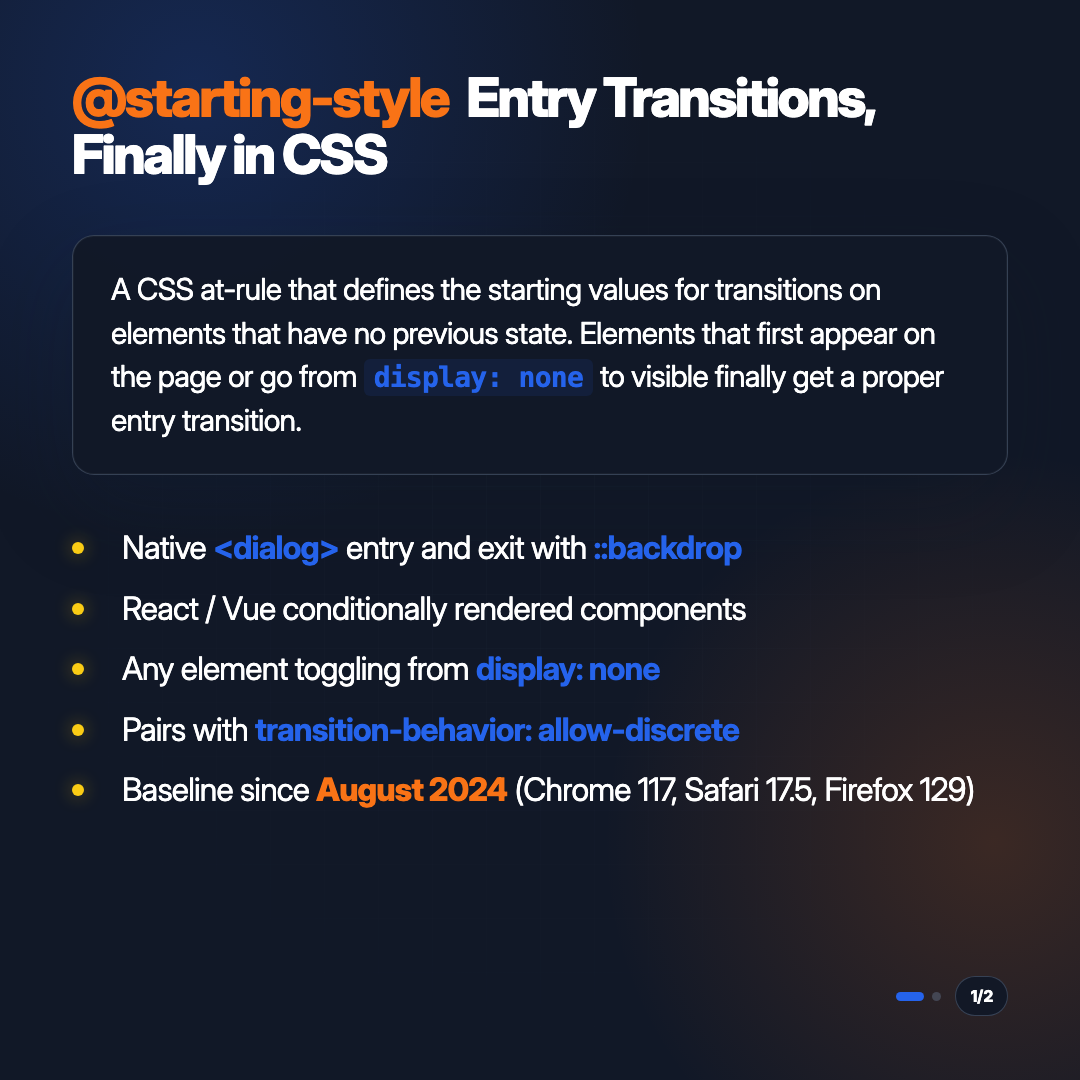
How many times did you wrestle with display: none just to make a component fade in? You change the opacity, set it to block, wait for a frame, toggle the opacity again, and still the transition doesn't fire. It's none of…
Read more →LinkedIn
Cache management in large frontend apps is one of those problems that feels simple until it isn't. You start with one or two data sources, then comes the third API, then a form that needs to update in real-time, then som…
Read more →LinkedIn
The Popover API is one of those browser features that quietly kills a whole category of dependencies. Before this, I'd reach for a JS package every time I needed a dropdown, tooltip, or menu. Most of them were fragile —…
Read more →LinkedIn
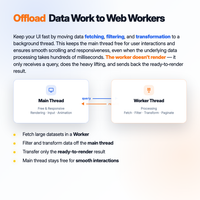
Your UI only needs what matters, not how much you loaded. Filtering a massive JSON payload in a component blocks the main thread, frees scroll, and stalls the screen before 20 rows render. Move that work to a Web Worker…
Read more →LinkedIn
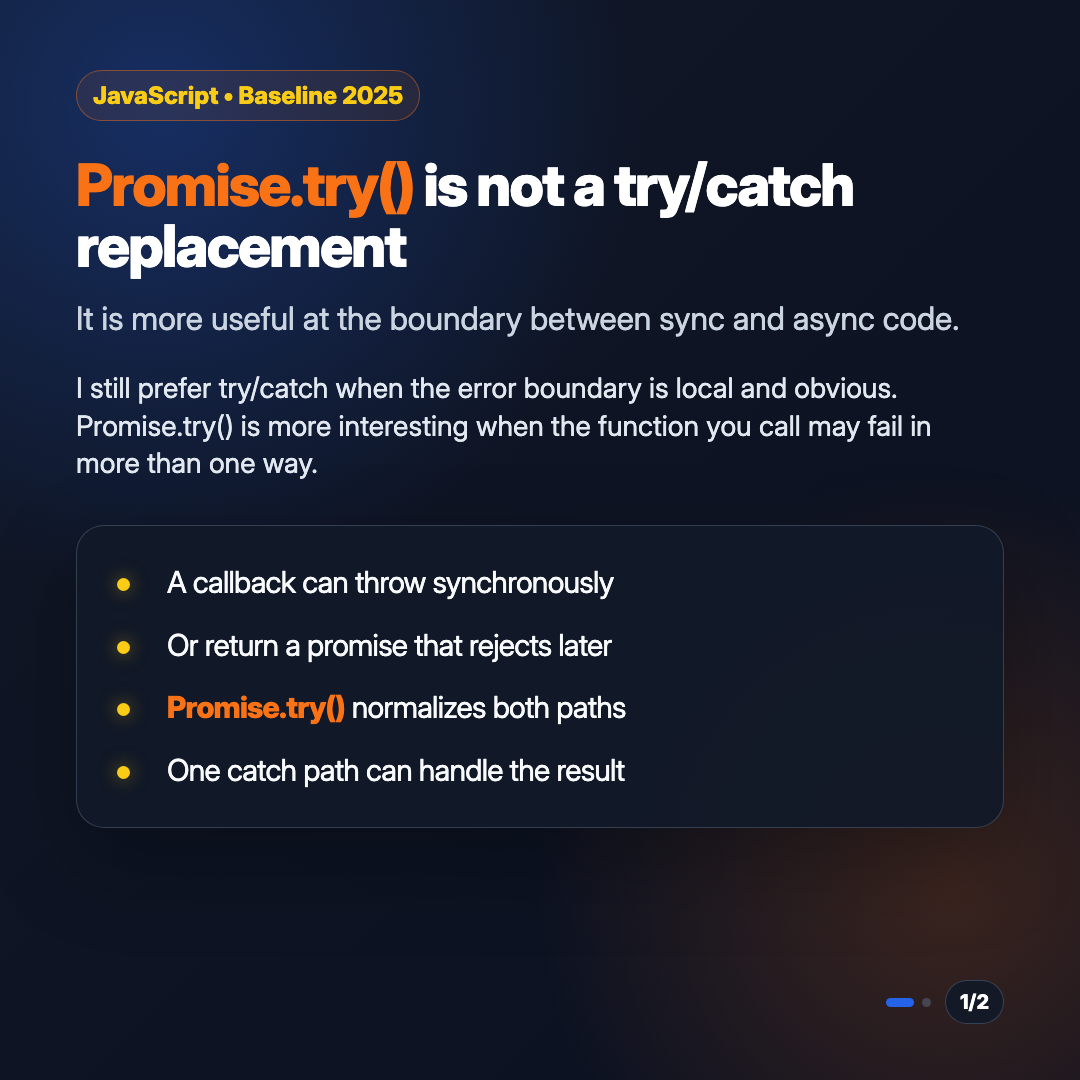
#JavaScript #ES2025 provides a useful helper for Promise-based error handling: Promise.try(). But it is not a try/catch replacement. I still prefer try/catch when the error boundary is local and obvious — it is clearer …
Read more →LinkedIn
Cross-document View Transitions have been supported for a while. The API lets ordinary multi-page links animate content between separate HTML files — no SPA required. Define `@view-transition` once, then use `view-trans…
Read more →LinkedIn
Removing a DOM element does not remove its event listeners. They stay detached in memory, still holding references to your code. Manual cleanup with removeEventListener is fragile. You need the exact same function refer…
Read more →LinkedIn
#CSS is getting native functions, and the direction is more interesting than the syntax itself. Kevin Powell shows how "@function" and "if()" could move spacing tokens, fluid type, and even responsive grid logic directl…
Read more →LinkedIn
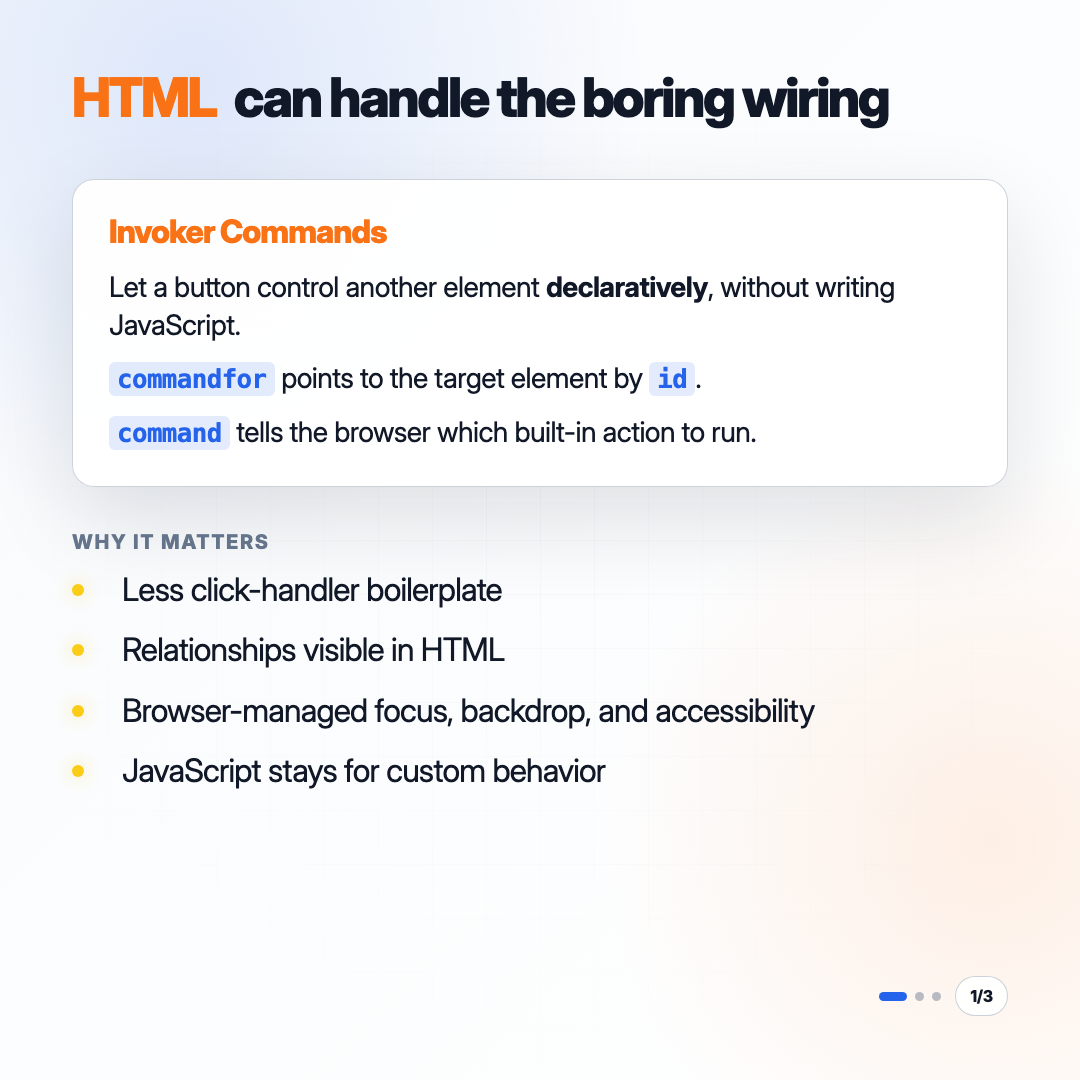
#HTML is getting new attributes that can remove a surprising amount of #JavaScript from common UI patterns. The `command` attribute lets a button trigger built-in browser actions directly from the markup. That covers e…
Read more →LinkedIn
Over the past month, I ran a small experiment. I used #AI to research and suggest LinkedIn content about topics I already like. I also used AI to generate post images from predefined themes, then organized the workflow …
Read more →LinkedIn
I was watching a video about AI workflows for frontend development. What caught my attention was the author's point about Vue skills: https://lnkd.in/dAedqwcS …
Read more →LinkedIn
Já perdi tempo demais explicando tipo em PHPDoc que o código já deixava implícito. …
Read more →LinkedIn
Já tentou fazer tooltip com #html e #css? Sempre foi algo desafiador desde os primórdios. Hoje em dia o mais comum é fazer a seta, clip-path, mas a sombra ficou retangular? Com a evolução do CSS, agora pode usar isso us…
Read more →LinkedIn
I turn 40 today 🎂🎉 I started building for the web around 2005, mostly with PHP and full-stack work before “full-stack” was really a label people used much. Almost 20 years later, the tools have changed a lot: V…
Read more →LinkedIn
#typeScript 7 is less about what you write, it is about how fast TypeScript can understand it. I'm honestly hyped 🤩 With Project Corsa, the compiler is being ported to Go/native code. Microsoft reports up to ~10x fas…
Read more →LinkedIn
No #react nem tudo na sua página precisa virar interativo no carregamento. - SSR entrega HTML cedo. - A hidratação ainda custa caro. - Só que esse custo pode ser adiado. Com TanStack Start, a hidratação pode acontecer …
Read more →LinkedIn
Some #HTML features are easy to miss. But they can replace code we often write by hand. Small features. Less glue code or weird javascript. Better semantics. #webdev #webdevelopment #frontend #accessibility
Read more →LinkedIn
#css abs() is a small function, but it solves a real problem. Sometimes CSS math goes negative. That is not very often, but it can happen. That can be useful for layout, like overlapping a card with margin-top: -32px. …
Read more →LinkedIn
Scroll animations were always annoying to wire up. It was always a pain using GSAP, Anime.js, or even Three.js (that feels like using a cannon to kill a fly) to achieve the same behavior. For simple cases, animation-ti…
Read more →LinkedIn
#css variables are powerful, but they accept almost anything by default. Strict typing for CSS variables is finally practical and it is not a common thing that developers implement on their styles. With @property, you…
Read more →LinkedIn
O attr() do #css finalmente ficou útil. Agora o CSS pode ler valores do HTML e usar em propriedades reais: → cor → tamanho → número → tempo → rotação Exemplo: data-valor="75" no HTML virando largura de uma barra…
Read more →LinkedIn
Array.fromAsync() is a new Stage 4 #javaScript feature for collecting async iterables into arrays. For a normal REST endpoint, fetch() + res.json() is still enough. Where it helps is when the API behaves like a seque…
Read more →